

Web Development Service
hello this
- Great team
- Waaahhhhh Kya baat hai
- Best in the World
Full Description
An IP Address (Internet Protocol Address) is a unique numerical label assigned to each device connected to a computer network that uses the Internet Protocol for communication. It serves two main purposes:
- Identifying a device on the network.
- Locating the device to enable communication with other devices over a network like the Internet.
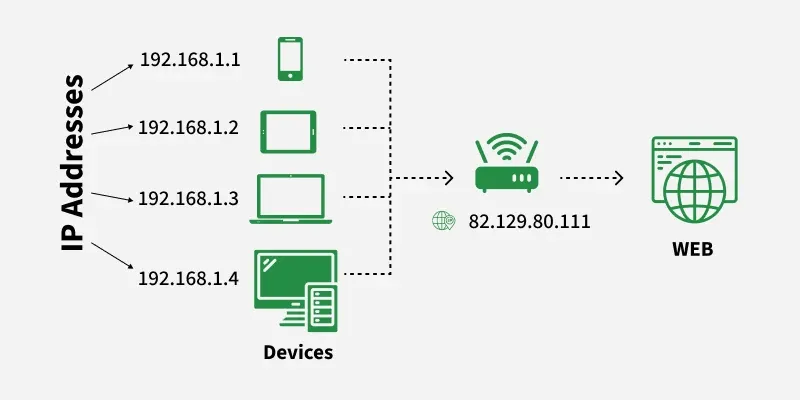 IP Address
Components of an IP Address
- Network Portion: Identifies the network to which the device belongs.
- Host Portion: Identifies the individual device on the network.
- Subnet Mask (for IPv4): Defines which part of the IP is network and which part is host.
Types of IP Address
IP addresses can be classified in several ways based on their structure, purpose, and the type of network they are used in. Here's a breakdown of the different classifications of IP addresses:
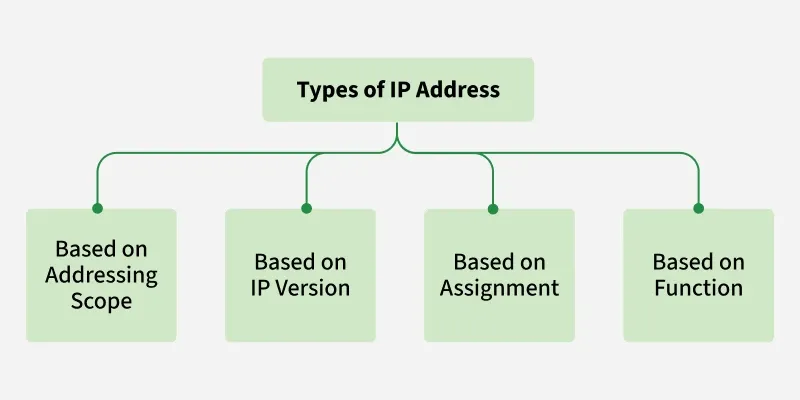 Types of IP Address
1. Based on Addressing Scope (IPv4 vs. IPv6)
1.1 Public IP Addresses
A Public IP address is assigned to every device that directly accesses the internet. This address is unique across the entire internet. Uniqueness & Accessibility are its key characteristics & are assigned by Internet Service Providers. When you connect to the internet through an ISP, your device or router receives a public IP address. These addresses can be static or dynamic.